


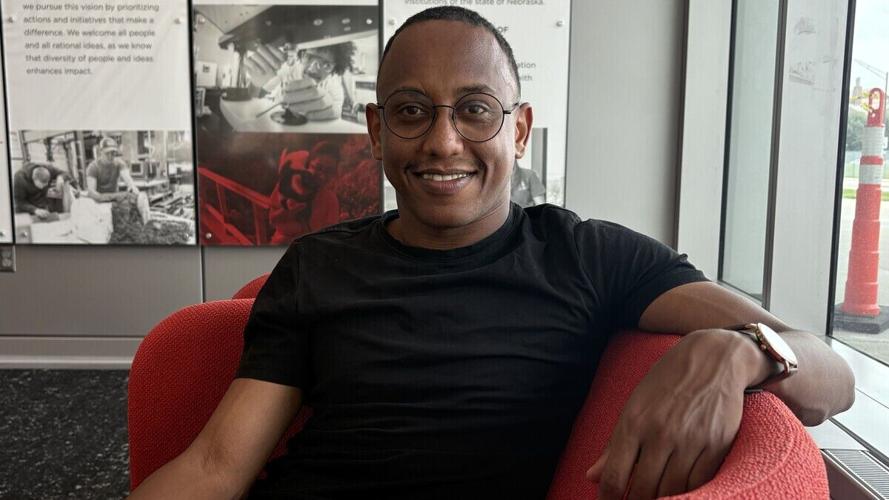
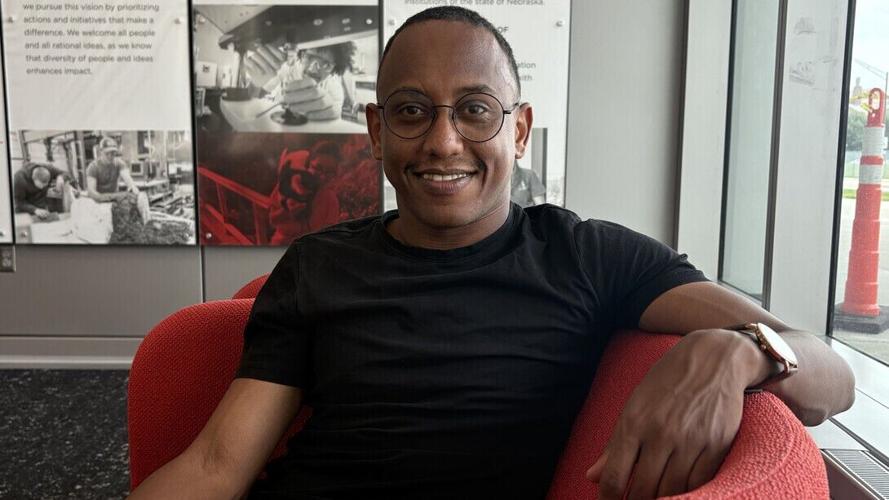
Brhanu Fentaw still remembers the feeling of watching the world shut down in 2020 — the fear, the uncertainty, the sense that humanity was reacting to a crisis few saw coming.
That experience now fuels his work as a biomedical engineering doctoral student at the University of Nebraska–Lincoln developing generative foundation models to forecast the emergence of arboviruses before they spill over into humans.
The idea has earned national recognition: a $25,000 Biswas Family Foundation Fast Grant, awarded to only 20 projects each cycle and designed to support bold, unconventional research at the intersection of artificial intelligence and human health.
For Fentaw, the news of the award felt like a signal that his instinct to pursue nontraditional, high-risk ideas was the right one.
“It really shaped my belief in myself,” he said. “If I have a great idea and work hard, people will give me the chance to show what I can do. (The Biswas Family Foundation) usually funds unconventional ideas, and it motivates me to keep proposing things that are outside the box.”
People are also reading…
Arboviruses — insect-borne viruses that infect an estimated 400 million people each year — represent one of the world’s most persistent public health threats. Many circulate quietly in insects for years before suddenly jumping into humans.
“We don’t know which insect-specific viruses will emerge next,” Fentaw said. “That uncertainty is the real danger.”
His research aims to flip the traditional outbreak timeline. Instead of tracking viruses after they appear, he trains AI models to learn the “language” of viral DNA and simulate future viral lineages six to 12 months before they emerge.
“If we had known COVID-19 would emerge one or two years earlier, we could have saved lives and prevented global disruption,” he said. “I believe AI gives us a real chance to do that next time.”
The Fast Grant will allow Fentaw to purchase high-performance computing resources, access specialized biological datasets and build a dashboard that public health agencies can use.
“(Our) generative models need a huge amount of computational data,” Fentaw said. “This grant lets us buy the data subscriptions we need to run the models, analyze the data and build tools that others can rely on.”
For Fentaw, who grew up in Ethiopia and saw firsthand how limited healthcare affects communities, the work is deeply personal. His long-term vision reaches even further: advancing AI-driven personalized medicine. But for now, his focus is clear — using artificial intelligence to help the world prepare for the next virus before it strikes.
“I’ve always wanted to apply machine learning to problems that help real people,” he said. “This project feels like purpose — like something that could genuinely make a difference.”


